Creating the Store of the Future: Turning Vision into Reality
Jun 11, 2026
One of the most significant challenges facing retail leaders today is balancing the demands of running the current business while simultaneously designing the future of the business. Daily operations consume time, attention, and resources, leaving little room for strategic thinking. Yet retailers that fail to invest in the future often find themselves reacting to industry changes rather than leading them.
Creating a “store of the future” is not simply a design exercise. It is a strategic initiative that defines how your brand will compete, connect with customers, and remain relevant in an increasingly competitive marketplace.
It’s About Experiences, Not Buildings
Many retailers make the mistake of beginning with floor plans, fixtures, and finishes. The most successful retailers start somewhere else: the customer experience.
Consumers today have more choices than ever. Products can be purchased online, delivered to homes, or found at competing retailers. What differentiates great retailers is the experience they create.
Customers remember how a brand makes them feel. They remember convenience, hospitality, speed, discovery, personalization, and emotional connection. The store of the future should be designed to deliver these experiences consistently across every customer touchpoint.
Before discussing architecture, ask a more important question: What do we want customers to say about us after they leave?
Understand Where the Industry Is Going
Strategic planning begins with understanding both current realities and future trends.
Study your industry carefully. Examine changing consumer behaviors, emerging technologies, labor challenges, competitive threats, and evolving shopping habits. Equally important, look outside your industry. Some of the best innovations come from observing “best-in-class” operators in completely different sectors.
Retailers such as Apple, Starbucks, Chick-fil-A, Costco, and Buc-ee’s have all created distinctive experiences that transcend their products. Their success often comes from understanding customer expectations before competitors do.
The goal is not to copy others, but to identify trends and opportunities that can influence your future vision.
Let Customers Help Shape the Future
Your customers often provide the clearest roadmap for future growth.
They shop your stores, visit competitors, use digital platforms, and interact with other retail concepts every day. Their expectations are constantly evolving.
Before beginning any major redesign effort, gather customer feedback through:
- Focus groups
- Customer interviews
- Intercept surveys
- Loyalty program feedback
- Online surveys
- Social media engagement
The objective is to understand not only what customers like today, but what they wish existed tomorrow.
The most successful retail concepts are often built by solving unmet customer needs.
Start with Brand Pillars
Every store-of-the-future initiative should begin by establishing three to five brand pillars.
Brand pillars become the foundation for every future decision involving operations, merchandising, technology, design, marketing, and customer service.
Examples might include:
- Speed and convenience
- Local community connection
- Freshness and quality
- Hospitality and service
- Innovation and technology
These pillars act as decision-making filters. If a new idea does not support the brand pillars, it likely does not belong in the concept.
Consistency creates stronger brands.
Build the Right Team
Store-of-the-future projects are too complex for any one department to manage alone.
Successful projects involve cross-functional teams that include:
- Operations
- Marketing
- Merchandising
- Real estate
- Finance
- Technology
- Human resources
- Design and construction
Many organizations also benefit from outside expertise. Consultants, architects, designers, and brand strategists can provide fresh perspectives while helping internal teams manage an already demanding workload.
External experts often challenge assumptions and introduce ideas that may never emerge from within the organization.
Let the Offer Determine the Store Size
One common mistake retailers make is selecting a building size first and then figuring out how to fill it.
A more effective approach is to define the customer experience and product offerings first.
Determine what the store will contain:
- Foodservice
- Beverage programs
- Fresh food
- Grocery
- Seating areas
- Digital ordering
- Pickup zones
- Community spaces
Once the attributes are defined, the appropriate building size often becomes much clearer.
The experience should drive the footprint—not the other way around.
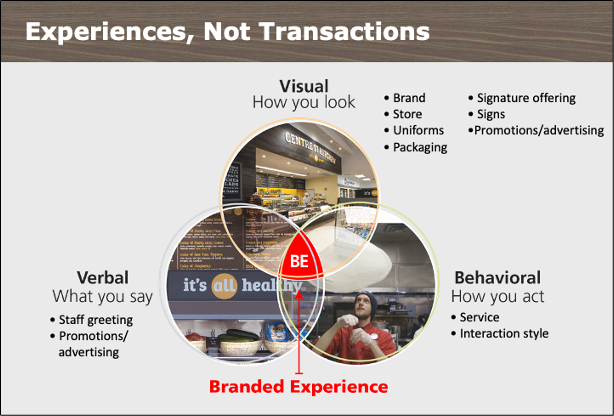
Align Every Element of the Brand
Great retail brands create alignment across every customer touchpoint.
The visual identity, store design, employee uniforms, packaging, signage, marketing materials, digital platforms, and employee behaviors should all reinforce the same message.
Customers experience brands holistically. One inconsistent interaction can weaken the overall perception of the brand.
The strongest concepts ensure that what customers see, hear, and experience all support the same promise.
Test, Learn, and Refine
No prototype is perfect.
The most successful retailers treat the first store as a learning laboratory. Customer feedback, operational observations, sales performance, and employee input should all be used to refine future locations.
Expect adjustments. Expect modifications. Expect surprises.
The objective is continuous improvement rather than perfection.
Creating the store of the future is not a one-time event; it is an ongoing process of learning and adaptation.
The Bottom Line
Designing a store of the future is one of the most demanding strategic projects a retailer can undertake. It requires balancing current operations with long-term vision, aligning multiple stakeholders, understanding evolving consumer expectations, and creating a differentiated brand experience.
However, the rewards are substantial.
A successful store-of-the-future initiative serves as both a roadmap for growth and a rallying cry for the organization. It communicates where the brand is headed, inspires employees, excites customers, and positions the company to compete successfully for years to come.
The retailers that thrive tomorrow are the ones willing to invest in that future today.
Want more ideas? For more information on a Store of the Future, visit the Gray Cat Learning Series: https://www.graycatenterprises.com/store-of-the-future
Co-Author: Kraig Kessel ([email protected]) is the co-founder of Kraido, a firm dedicated to developing branded environments, specializing in petroleum retailing and convenience stores. For more information, please visit: www.kraido.com.
